




Delivery of Factory ECO to a Large Installation – Behind the Logistics Process
The delivery of antifreeze fluid to a large industrial installation requires precise logistics planning and technical coordination. In high-volume HVAC and refrigeration systems, not only the quality of the heat transfer medium is crucial, but also proper transport organization, cargo safety, and parameter control during system commissioning.
In this article, we show how a Factory ECO delivery process looks in practice – from selecting the appropriate packaging format, through loading and transportation, to preparing the installation for filling.

Factory ECO – Antifreeze Fluid for Large Industrial Installations
In large HVAC systems, refrigeration installations, and public utility buildings, the safety of people, equipment, and the environment is a priority.

Factory ECO is an antifreeze fluid based on monopropylene glycol, designed for demanding industrial applications. It:
-
holds PZH approval,
-
is safe in the event of installation leakage,
-
is not a regenerated product,
-
is covered by a 5-year manufacturer’s warranty,
-
contains corrosion inhibitors protecting valves, pumps, and heat exchangers.
For systems requiring leak verification, the Factory ECO D version is available – equipped with a leak detector, allowing installation inspection using the ProLight D1018 lamp.
Factory ECO Logistics – From Canisters to Tanker Delivery
For large system volumes (hundreds or thousands of liters), proper organization of antifreeze fluid delivery is essential.
Factory ECO can be supplied in various formats:
-
canisters,
-
drums,
-
IBC containers (mauzers),
-
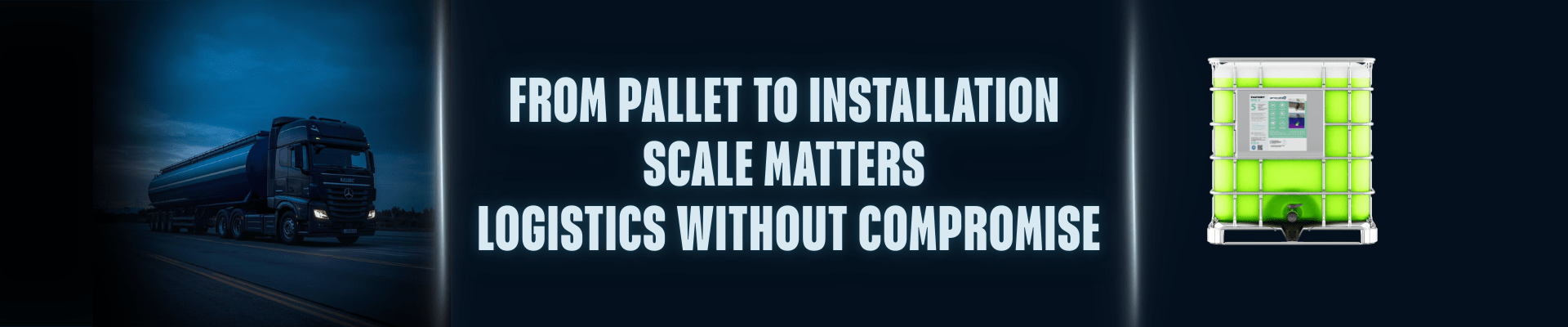
tanker trucks – for very large system volumes.
The delivery format is selected individually, depending on the technical conditions of the investment and the filling method of the installation.
Choosing the right delivery option helps optimize logistics efficiency, reduce handling time, and streamline implementation in large industrial projects.


Loading and Transport – Safety of Large-Scale Deliveries
Loading operations are carried out using forklifts, enabling efficient preparation of palletized or full-truck transport.
Pallets and IBC containers are arranged inside the trailer to ensure:
-
transport stability,
-
even weight distribution,
-
safe unloading at the project site.
In the case of tanker delivery, direct pumping of the fluid into the installation is possible. Technical details of such solutions are arranged individually with the sales department.
Installation Preparation Before Filling
Fluid delivery is only one stage of the overall project. Before filling the system with antifreeze fluid, the installation must be properly prepared.
Depending on the installation’s condition, the following products are used:
-
Factory Flush – for new installations,
-
Aquacorr Cleaner – for systems already in operation.
Proper flushing removes assembly residues and deposits, extending the life of the heat transfer medium and improving overall system performance.
Leak Detection and Operational Parameter Control
When using Factory ECO D with leak detector, installation verification is performed with the ProLight D1018 lamp, allowing fast and effective leak detection.
After filling, operational parameters are checked using a refractometer to confirm:
-
the correct freezing point,
-
proper glycol concentration.
The use of undiluted concentrates is avoided, as excessive fluid density may increase the load on pumps and system components.
Delivery of Factory ECO to a Large Installation – Summary
The delivery of antifreeze fluid to a large industrial HVAC installation includes:
-
selection of the appropriate product version (Factory ECO / Factory ECO D),
-
choice of delivery format (canisters, drums, IBC containers, tanker),
-
professional logistics preparation,
-
installation preparation before filling,
-
leak detection and operational parameter verification.
As a result, investors receive not only a product, but comprehensive technical and logistics support for large-scale HVAC and refrigeration projects.

Installation Preparation and Fluid Parameter Verification
In large installations, proper preparation also includes:
-
prior system flushing,
-
correct glycol concentration selection,
-
parameter verification after filling.
Dedicated cleaning agents are used to flush the installation, and after filling with Factory ECO, medium parameters are verified using a refractometer to confirm the design freezing temperature.
Undiluted concentrates are not recommended, as excessive density may overload pumps and reduce system efficiency.
👉 Planning antifreeze fluid delivery for a large industrial installation?
Contact us – technical details will be arranged individually with our sales department.
Articles
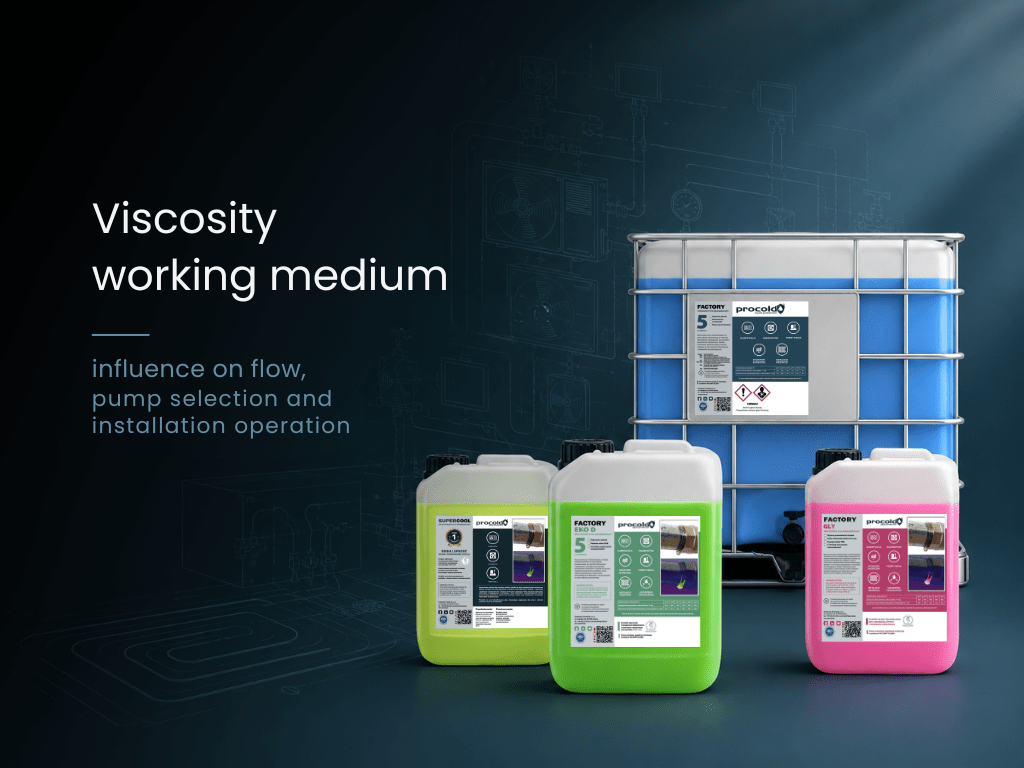
Heat-Transfer Fluid Viscosity in HVAC Systems: Why It Matters for Flow and Pump Selection
Learn how fluid viscosity affects flow, pump selection and HVAC system performance—and why every heat-transfer fluid requires the […]
05/08/2026
How to Detect Leaks in an HVAC System? The Prolight D1018 Detector Lamp in Practice
See how the Prolight D1018 helps you quickly detect leaks in HVAC systems.
02/07/2026
QuickTest Inhibitor – a quick check of the anti-corrosion protection of HVAC installations
See how QuickTest Inhibitor test strips help you quickly verify the level of corrosion protection in HVAC systems […]
01/06/2026
HVAC Optimization: How Aquacorr SI Restores System Efficiency (Case Study)
How can you protect your central heating and HVAC systems from corrosion? Discover an effective solution based on […]
28/04/2026
Water in a Heat Pump System – What Really Determines System Longevity?
HVAC system fluid – a key yet often overlooked factor in system longevity.
30/03/2026
Delivery of Factory ECO to a Large Installation – Behind the Logistics Process
What does the delivery of Factory ECO to a large installation look like? Discover the logistics process, loading […]
13/02/2026
SUPERCOOL – a new era of efficiency in industrial refrigeratio
SUPERCOOL is a breakthrough in industrial refrigeration. Discover how potassium formate reduces energy costs and increases the efficiency […]
30/01/2026
Glycol or Water in Underfloor Heating with a Heat Pump?
Glycol in underfloor heating systems with heat pumps is now a safety standard. Find out why choosing the […]
29/12/2025