





Water in a Heat Pump System – What Really Determines System Longevity?
“Can we just fill it with regular water?”
This question came up during one of the installations featured on the Holibood channel. At first glance, it seems simple—we are dealing with a new system, a properly selected heat pump, and an installation completed according to best practices. Since everything works, it is easy to assume that the system fluid is just a formality.
In reality, this is exactly where one of the most important decisions for the entire installation begins.

The system works well at the beginning. That doesn’t prove anything yet
At first, everything looks perfect. Parameters are stable, flow rates are correct, and the system operates exactly as intended. From the investor’s perspective, this is the moment to relax. From the installer’s perspective, this is only the starting point.
A heating system is not static. As it operates, the internal environment changes, and that means the fluid begins to directly influence durability, efficiency, and operational safety.
What changes inside the system after a few months?
It is rarely a sudden failure. Much more often, subtle symptoms appear: a slight drop in efficiency, increased energy consumption, less stable system performance, or reduced thermal comfort. From the outside, everything still looks fine, but inside the system, processes are taking place that become increasingly important over time.
That is why the question of water in the system should not end with “does it work?”
System fluid is more than just water
In everyday language, we often refer to “filling the system with water,” but technically speaking, the fluid is the working environment of the entire system. During operation, its properties change—pH shifts, oxygen enters the system, and reactions occur with installation materials. Over time, this can lead to deposits and corrosion products forming inside the system.
This is why the choice of fluid is not a minor detail. It is one of those elements that are not visible at first glance but have a direct impact on system performance and longevity.
Is tap water a good choice?
It is the simplest option—and precisely for that reason, it can be the most misleading. Tap water can have variable parameters, and its hardness, mineral content, and dissolved gases may affect the system over time in ways that are not immediately visible.
That is why a professional approach rarely involves using untreated tap water without prior analysis or preparation. In modern systems, the goal is not to use “any water,” but to consciously create the right operating conditions for the system.
What about demineralized water?
Demineralized water is definitely a better starting point. It reduces hardness and eliminates some of the risks associated with scale buildup. However, this does not automatically solve the problem.
On its own, demineralized water does not always provide long-term parameter stability. It does not fully address corrosion risks, does not eliminate the effects of oxygen, and does not answer how the system will behave months or years later. In practice, it is a base for further decisions rather than a complete solution.
What does a professional approach look like?
In well-managed installations, there is no single answer for every case. The choice of fluid depends on the type of system, materials used, operating conditions, and expectations for long-term performance.
In some cases, the right direction is water prepared according to standards, such as Aquapro VDI2035.
In others, a better solution is combining properly prepared water with corrosion inhibitors and ongoing monitoring, using solutions such as Aquacorr and QuickTest.
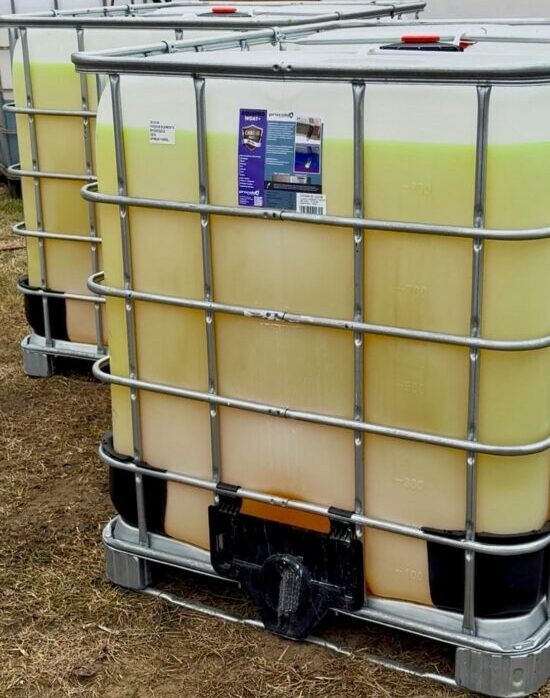
There are also situations where the most effective option is a ready-to-use fluid with stabilized parameters, such as AQUAPRO WOAT+.
The key principle is simple: the solution must be adapted to the installation, not chosen as a shortcut.
The biggest issue appears later
In many installations, the topic of fluid ends on the day the system is commissioned. This is where another common mistake occurs. The issue is not only what was used initially, but the fact that no one checks what happens to the fluid over time.
And it is precisely during operation that the system reveals whether the chosen solution was appropriate.
Control instead of guesswork
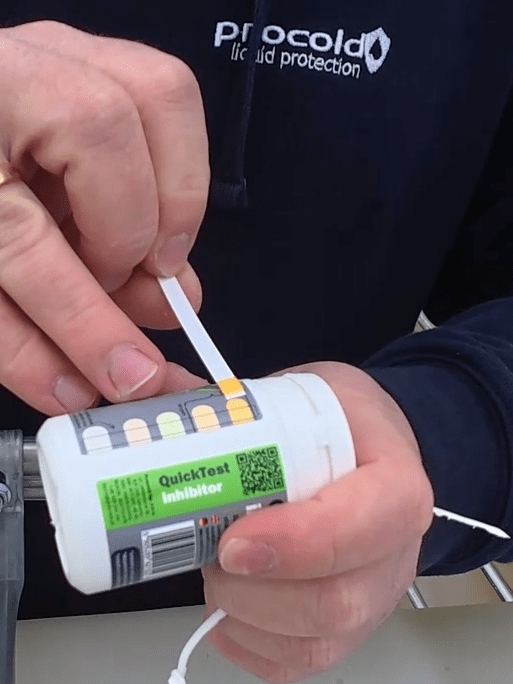
This is one of the strongest conclusions from the entire material. A system should not be managed “by intuition.” If fluid parameters can be monitored, then monitoring becomes the simplest way to detect changes early and respond before real problems occur.
In practice, this means shifting from “it seems to work” to “we know the condition of the system.”

What if the system starts performing worse?
At that point, we are usually dealing with consequences rather than causes. Restricted flow, contamination, deposits, or reduced efficiency are typically the result of what has been happening inside the system over a longer period.
That is why it is much more reasonable not to wait until the system starts showing problems, but to ensure proper fluid quality and monitoring in advance.
Additional value: faster diagnostics
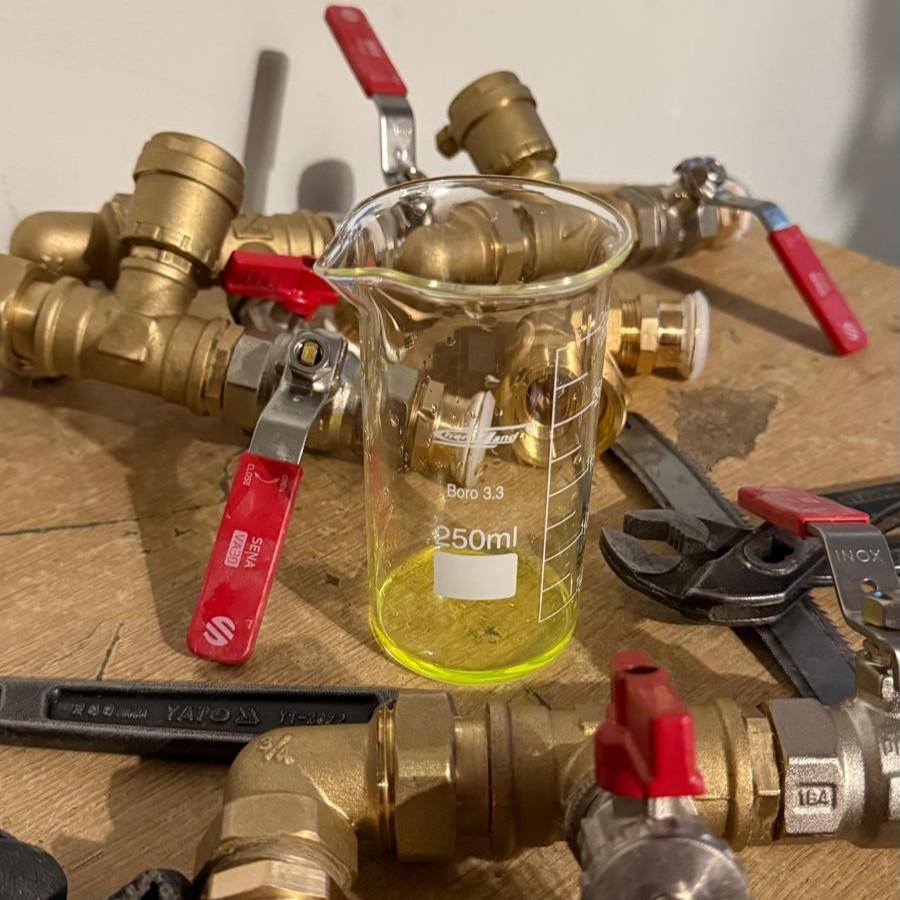
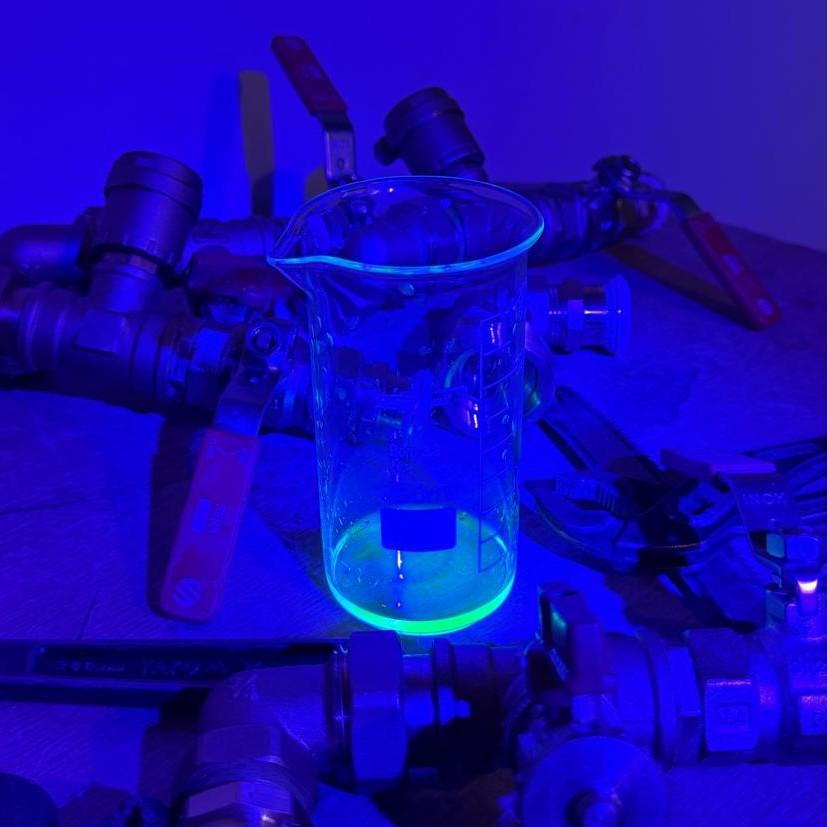
In modern approaches, the value of system fluid is not limited to durability. It also supports operation and maintenance. In practice, solutions such as UV leak detection can be extremely helpful, allowing quick identification of leaks and confirmation of their source.
This may seem like a minor feature from the investor’s perspective, but from a service standpoint, it significantly simplifies troubleshooting.
Leak detection fluid with a UV tracer – when illuminated by a detection lamp, the leak becomes immediately visible:
Key takeaways from this case
This case clearly shows that a heat pump installation does not end at the moment of commissioning. In fact, that is when its real operation begins.
What happens inside the system directly affects efficiency, lifespan, and operational safety. That is why the choice of fluid should not be treated as a minor detail—it is one of those decisions that either pays off or causes problems over time.
Summary
A well-executed installation is only the first step. Its real quality depends on the conditions in which it operates over months and years.
That is why system fluid should never be a random choice. It should be a conscious decision based on system parameters, operating conditions, and the ability to monitor it over time.
If you are unsure which solution is right for a specific system, it is best to start with an analysis and only then choose the appropriate option.
Support in selecting the right solution
If you want to choose the right fluid for a heat pump system or determine the best approach for your installation, it is worth basing your decision on actual operating conditions.
FAQ – most common questions about water in heat pump systems
Can a heat pump system be filled with tap water?
Yes, but without prior analysis, this approach carries risk. Tap water may have variable hardness and composition, which can affect system durability over time.
Is demineralized water sufficient for a heat pump system?
It can be a good starting point, but not always a final solution. It does not fully address stability, corrosion, or long-term monitoring.
When should VDI 2035-compliant water be used?
It is used in systems where controlled fluid quality is required, often aligned with manufacturer recommendations.
Why is fluid monitoring important?
Because it allows you to verify whether the system is still operating under optimal conditions and detect changes before they impact performance.
Do ready-to-use system fluids make sense?
In many cases, yes—especially when the goal is to simplify fluid preparation and reduce the risk of errors.
What should be done if system performance drops?
The first step is to check the fluid condition and system parameters. Only then should decisions be made regarding cleaning, adjustments, or changes in approach.
Articles

How to Choose a Heat Transfer Fluid for an HVAC System? 7 Key Selection Criteria
Discover 7 key criteria: temperature, materials, safety, pump parameters and fluid monitoring.
24/09/2026
Heat-Transfer Fluid Viscosity in HVAC Systems: Why It Matters for Flow and Pump Selection
Learn how fluid viscosity affects flow, pump selection and HVAC system performance—and why every heat-transfer fluid requires the […]
05/08/2026
How to Detect Leaks in an HVAC System? The Prolight D1018 Detector Lamp in Practice
See how the Prolight D1018 helps you quickly detect leaks in HVAC systems.
02/07/2026
QuickTest Inhibitor – a quick check of the anti-corrosion protection of HVAC installations
See how QuickTest Inhibitor test strips help you quickly verify the level of corrosion protection in HVAC systems […]
01/06/2026
HVAC Optimization: How Aquacorr SI Restores System Efficiency (Case Study)
How can you protect your central heating and HVAC systems from corrosion? Discover an effective solution based on […]
28/04/2026
Water in a Heat Pump System – What Really Determines System Longevity?
HVAC system fluid – a key yet often overlooked factor in system longevity.
30/03/2026
Delivery of Factory ECO to a Large Installation – Behind the Logistics Process
What does the delivery of Factory ECO to a large installation look like? Discover the logistics process, loading […]
13/02/2026
SUPERCOOL – a new era of efficiency in industrial refrigeratio
SUPERCOOL is a breakthrough in industrial refrigeration. Discover how potassium formate reduces energy costs and increases the efficiency […]
30/01/2026