


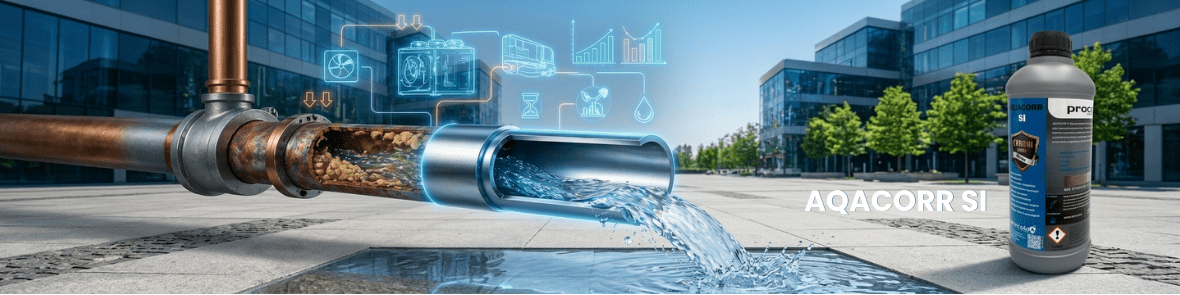


HVAC Optimization: How Aquacorr SI Restores System Efficiency (Case Study)
Corrosion and deposits in HVAC systems are among the most common causes of reduced heating and cooling system efficiency. In practice, this leads to higher energy bills, an increased risk of breakdowns, and a shortened equipment lifespan.
In this article we show how to use a corrosion inhibitor for central heating installations – Aquacorr SI allows you to effectively protect your HVAC installation, improve its efficiency, and reduce operating costs. The analysis is based on actual implementation in an office facility.

Characteristics of the facility
- Type:office and service building
- Surface: ok. 2 500 m²
- Installation:central heating + cooling (chiller, fan coils)
- Materials:steel, copper, aluminum
- Working medium:installation water
Challenge: Decreased HVAC efficiency
The user of the facility reported a number of disturbing symptoms:
- uneven temperature distribution in rooms,
- decrease in cooling efficiency,
- increase in energy consumption,
- noise in the installation (noise, flow),
- frequent air entry into the system.
These symptoms are typical of systems that have not been treated with appropriate chemicals for a long time. Over time, deposits accumulate and corrosive processes develop, gradually restricting flow and impairing heat transfer.
In practice, this means that the installation is operating less and less efficiently, despite no changes in energy demand.
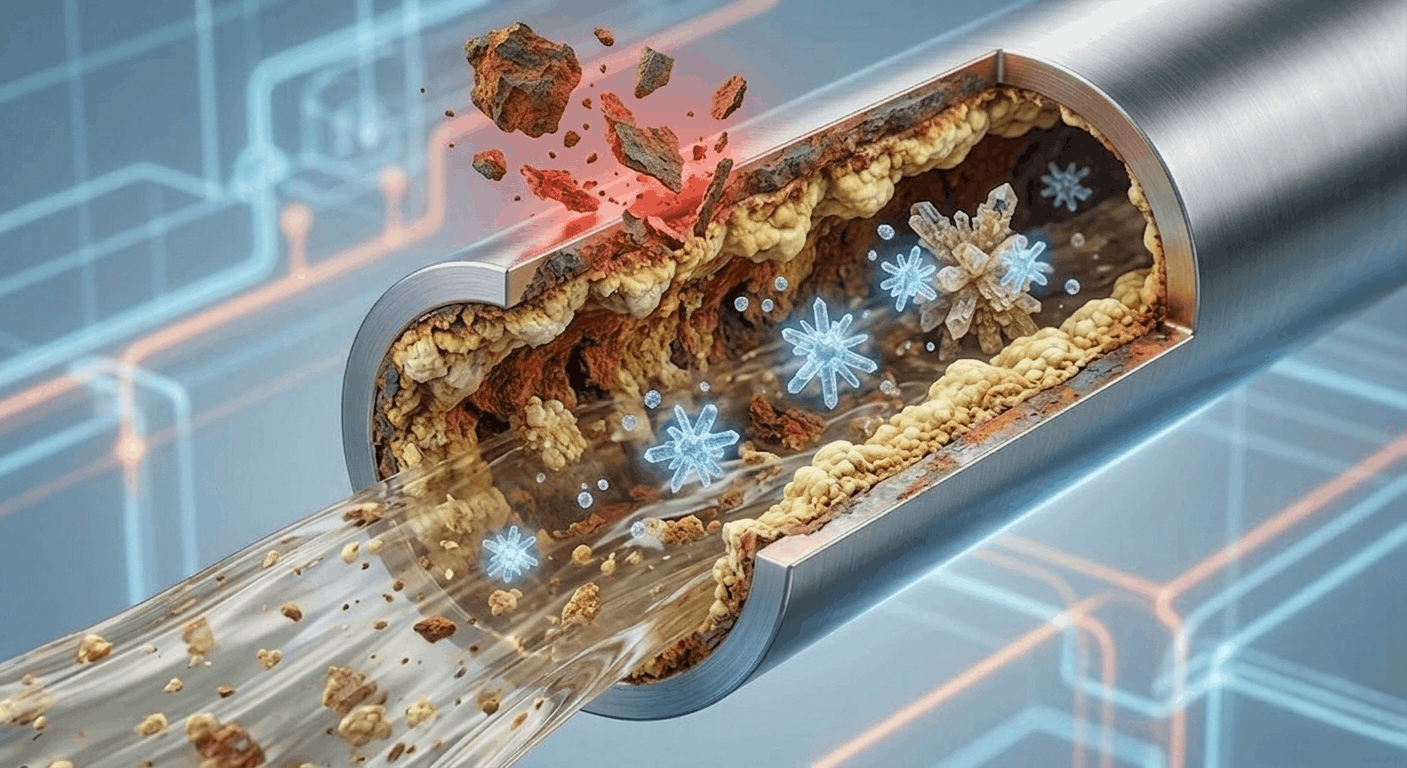
Diagnosis:The analysis revealed the presence of sediment, sludge, and corrosion products (metal oxides). The main cause was the installation operating on raw water without adequate chemical protection.
👉 Just 1 mm of deposits on the heat exchanger can reduce its efficiency by up to 10%, which directly translates into operating costs.
Solution: Aquacorr SI – corrosion inhibitor for central heating installations
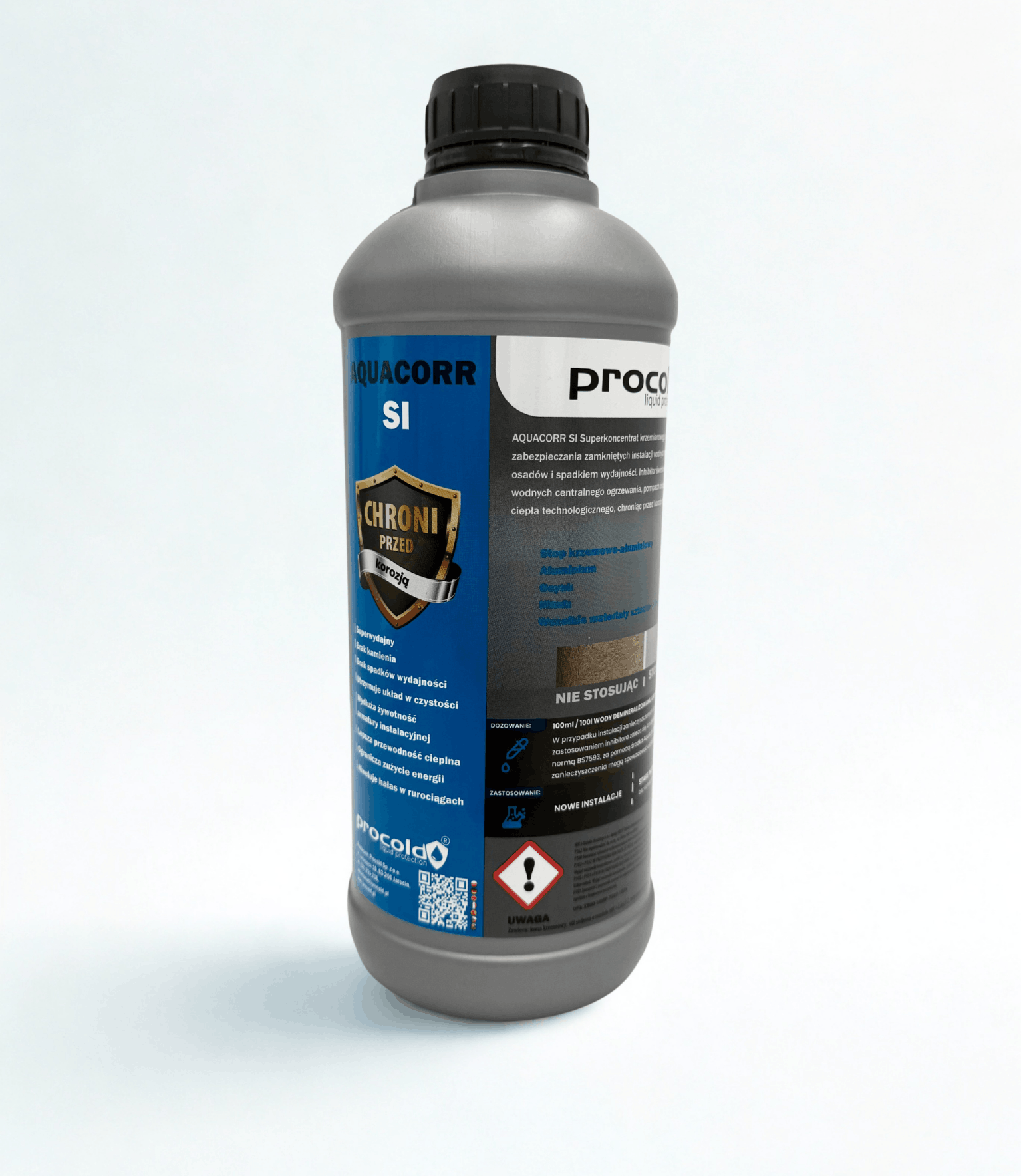
In order to stabilize the operation of the system, Aquacorr SI– silicate corrosion inhibitor intended for closed water installations (central heating, HVAC, heat pumps).
Aquacorr SI is a professional HVAC chemical designed to create a controlled operating environment. This means limiting corrosion-producing reactions and minimizing deposit buildup.
For more product information, please visit the Aquacorr SI website.
Key parameters and advantages:
- very low dosage:0.1% by volume(1 liter per 1000 liters of water),
- effective protection of multi-material installations (steel, copper, aluminum),
- reducing the formation of scale and deposits,
- stabilization of water parameters, including pH,
- extending the life of the entire installation.
Implementation – step by step
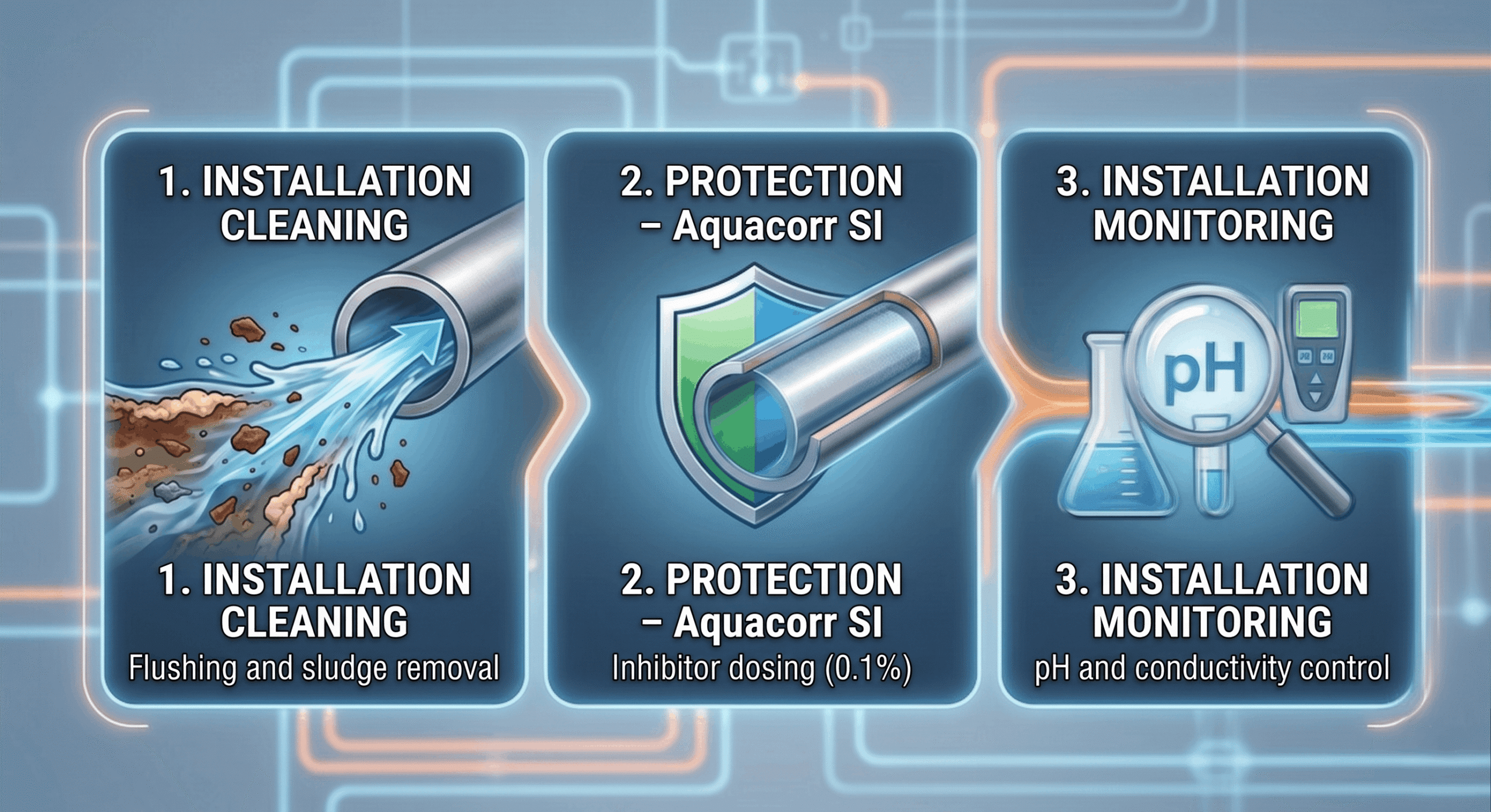
1. Cleaning the installation
The first step was to prepare the system by thoroughly cleaning it. Removing existing contaminants is essential for the inhibitor to function effectively.
The process included the elimination of:
- limestone deposits,
- sludge,
- corrosion products.
Process parameters:
- cleaning agent dosage: 0.5–1%,
- working time: from 1 to 12 hours (depending on the degree of soiling).
After flushing was completed, the installation was thoroughly rinsed with clean water.
2. Protection – Aquacorr SI
After preparing the system, the Aquacorr SI inhibitor was introduced at a ratio of 1 liter per 1000 liters of water.
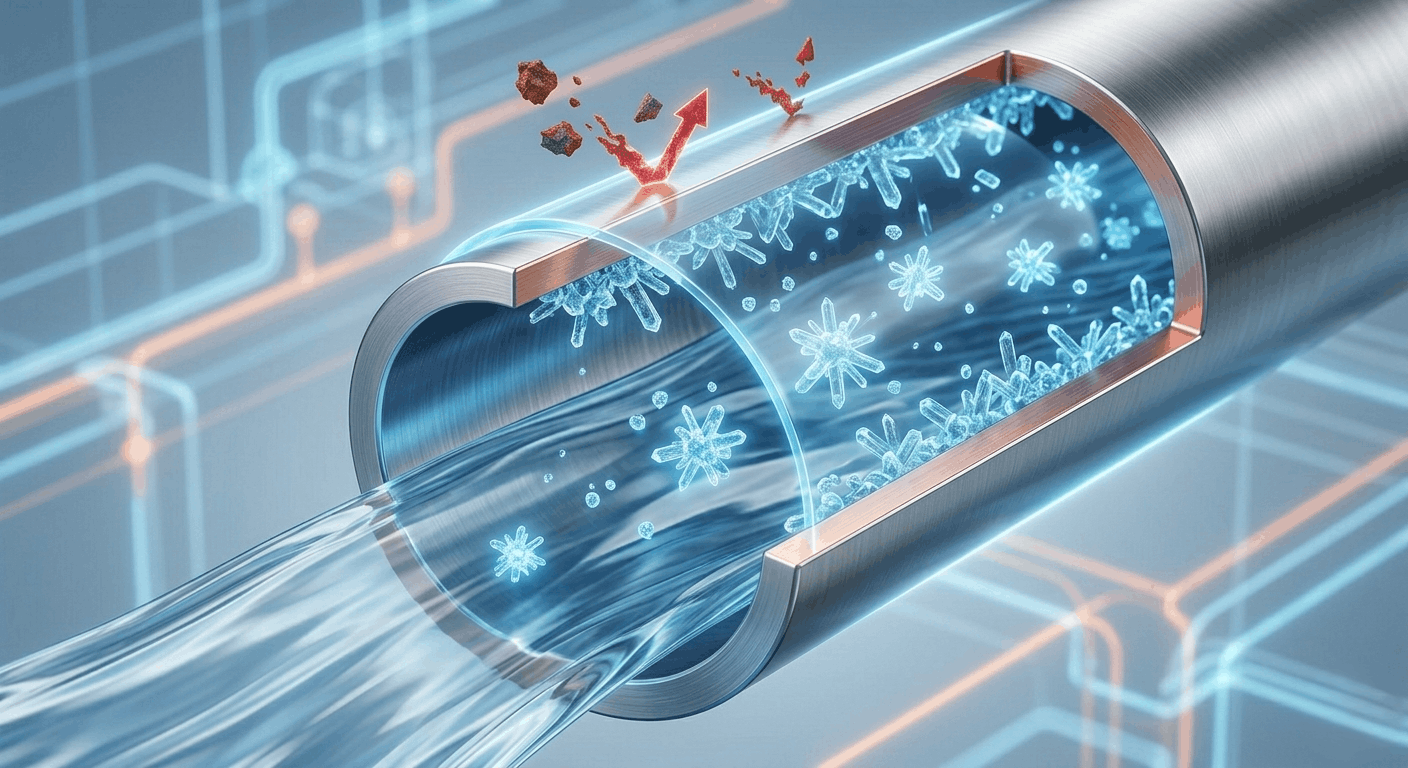
The product creates a protective layer on metal surfaces, limiting corrosion processes and stabilizing the installation’s operating environment. As a result, the installation operates under more controlled chemical conditions, which translates into improved efficiency and durability.
3. Monitoring and control
Maintaining the results requires regular monitoring of system water parameters. The following are crucial:
- pH (optimally around 10),
- conductivity,
- chemical composition of samples.
Regular monitoring allows for the quick detection of deviations and prevents further deterioration of the installation.
⚠️ Important expert tip: Aquacorr SI is a silicate inhibitor and should not be mixed with organic inhibitors. It is also not compatible with test strips – more accurate measurement methods are required.
Implementation effects
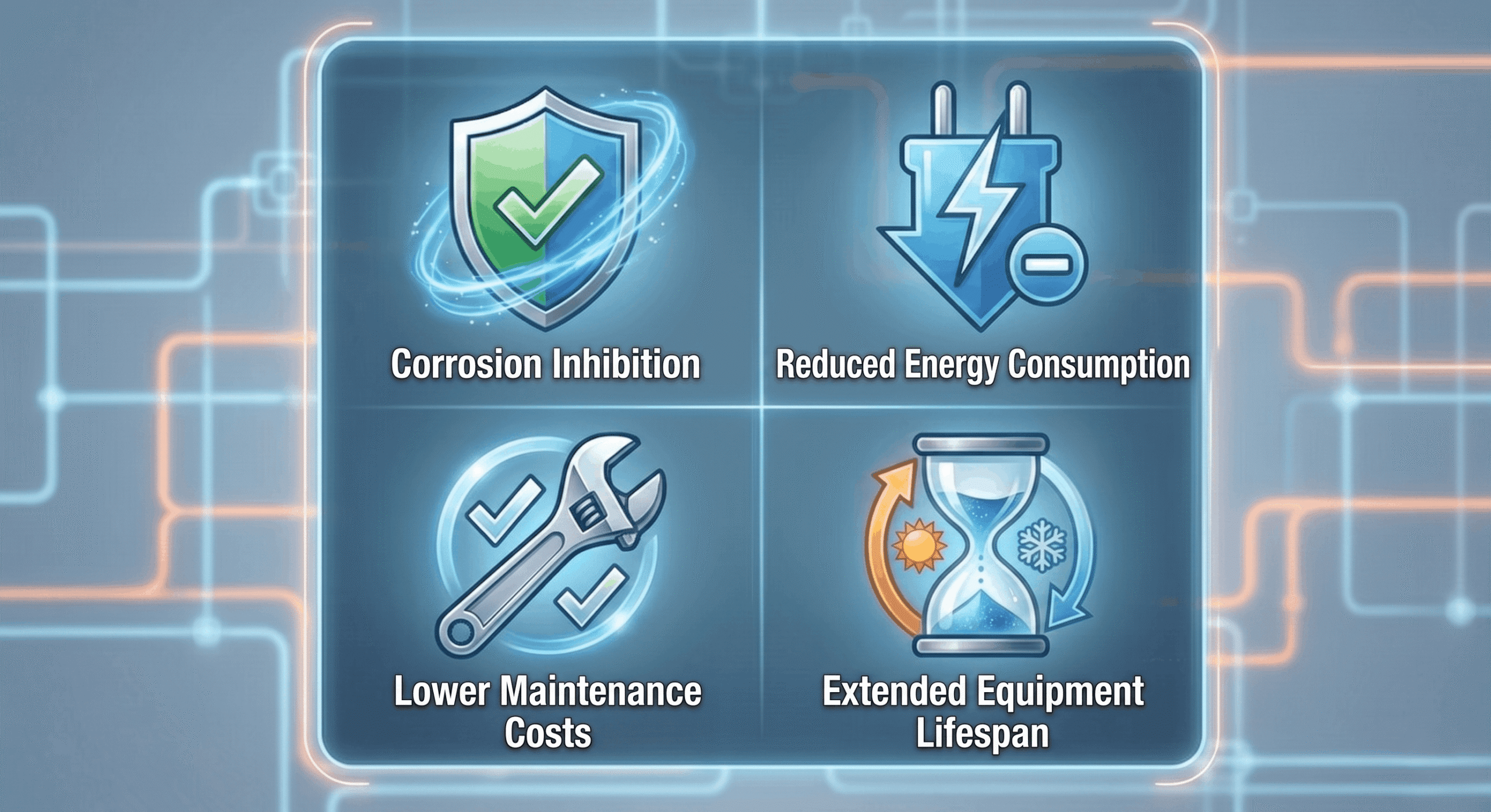
The use of appropriate installation chemicals has brought tangible benefits, both technical and business.
Technical
- inhibition of corrosion processes,
- stabilization of water parameters,
- elimination of air in the installation.
Operational
- improving heat exchange efficiency,
- lower energy consumption,
- quieter and more stable system operation.
Business
- reducing service costs,
- extending the life of devices,
- reducing the risk of failure.
Implementing appropriate chemical protection not only eliminates current problems but, above all, stabilizes the installation’s operating environment. This allows the system to operate effectively for a long time without the risk of rapid recurrence of faults.
When to use Aquacorr SI?
The solution is especially recommended for:
- central heating and HVAC installations operating on water,
- mixed material systems (steel, copper, aluminum),
- older installations requiring efficiency improvements,
- systems in which the optimization of operating costs is key.
👉 In installations exposed to freezing (e.g. monoblock heat pumps), antifreeze fluids such as glycols or potassium formate should be used.
Watch the Aquacorr SI video
Watch the video where a salesperson discusses the use of Aquacorr SI in HVAC installations.
FAQ – frequently asked questions
Can Aquacorr SI be used in any central heating installation?
Yes, in closed water systems. In systems exposed to freezing, other solutions should be used.
Does a corrosion inhibitor remove deposits?
No. Before using it, it is necessary to clean the installation.
How often should water parameters be checked?
Regularly – especially pH, conductivity and chemical composition.
Can different inhibitors be mixed?
No. Aquacorr SI should not be mixed with organic inhibitors.
Need technical advice?
Selecting the right chemicals for your HVAC installation is crucial to its durability and efficiency.
👉 Contact our sales representative: procold.pl/kontakt
We will help you choose a solution tailored to your installation.
Articles
Heavy Duty Coolant for Industrial Engines – What Does It Really Mean?
How does a Heavy Duty coolant differ from a plain glycol base? We explain the role of inhibitors, […]
12/10/2026
How to Choose a Heat Transfer Fluid for an HVAC System? 7 Key Selection Criteria
Discover 7 key criteria: temperature, materials, safety, pump parameters and fluid monitoring.
24/09/2026
Heat-Transfer Fluid Viscosity in HVAC Systems: Why It Matters for Flow and Pump Selection
Learn how fluid viscosity affects flow, pump selection and HVAC system performance—and why every heat-transfer fluid requires the […]
05/08/2026
How to Detect Leaks in an HVAC System? The Prolight D1018 Detector Lamp in Practice
See how the Prolight D1018 helps you quickly detect leaks in HVAC systems.
02/07/2026
QuickTest Inhibitor – a quick check of the anti-corrosion protection of HVAC installations
See how QuickTest Inhibitor test strips help you quickly verify the level of corrosion protection in HVAC systems […]
01/06/2026
HVAC Optimization: How Aquacorr SI Restores System Efficiency (Case Study)
How can you protect your central heating and HVAC systems from corrosion? Discover an effective solution based on […]
28/04/2026
Water in a Heat Pump System – What Really Determines System Longevity?
HVAC system fluid – a key yet often overlooked factor in system longevity.
30/03/2026
Delivery of Factory ECO to a Large Installation – Behind the Logistics Process
What does the delivery of Factory ECO to a large installation look like? Discover the logistics process, loading […]
13/02/2026