




What are our antifreeze fluids made of?
For Procold, product quality is top priority. We make our products from highquality raw materials that, if properly used, can serve you for years. In this article, we take a closer look at the substances from which our antifreeze fluids are made.
Monopropylene glycol
One of the key substances used in our products is monopropylene glycol. It is an organic chemical compound, which is a type of diol (dihydroxy alcohol). This colourless, oily liquid is soluble in water, chloroform and acetone. Due to its hygroscopic properties, propylene glycol is widely used in many industries, including the pharmaceutical and food industry as a preservative. In the refrigeration industry, propylene serves as the basis for the most versatile heat transfer fluids.

Monopropylene glycol is environmentally friendly and poses no risk to life or the environment. It can be safely used in food cooling systems, sprinkler systems and in the lower heat sources of pumps where there is a risk of the fluid permeating into the soil. It is a perfect solution for equipment and installations where safety is the top priority.
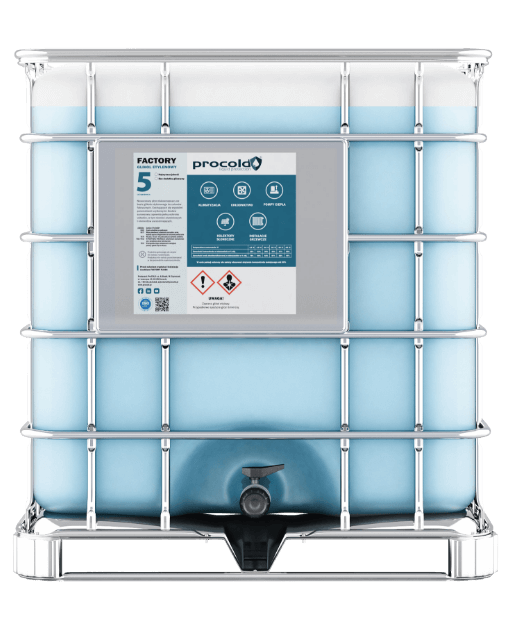
Monoethylene glycol
Monoethylene glycol similar to propylene glycol, is an organic chemical compound and the simplest polyhydroxy alcohol. It is colourless, odourless and toxic. Due to its toxicity, it is mainly used in the refrigeration industry, where it serves as a basis for heat transfer fluids in industrial systems and car radiators. After propylene glycol, it is the second most popular base material for antifreeze fluids.
The biggest advantages of ethylene glycol-based products are their efficiency and cost-effectiveness. Products based on monoethylene glycol are the go-to solution for installers, as they have similar properties as propylene glycol-based products, but are less expensive.
Glycerol
Another raw material we use to make our fluids is glycerol. The consistency of glycerol resembles an oily syrup, which is odourless, colourless, hygroscopic and highly hydrophilic (the chemical molecules of glycerol bind with water). Glycerol is a type of trihydroxy alcohol. Glycerol-based products work well at higher temperatures. Similar to monopropylene glycol, glycerol is an environmentally friendly product. Fluids based on glycerol do not pose the risk of damage to the environment or human health. Glycerol can also be safely mixed with propylene glycol.

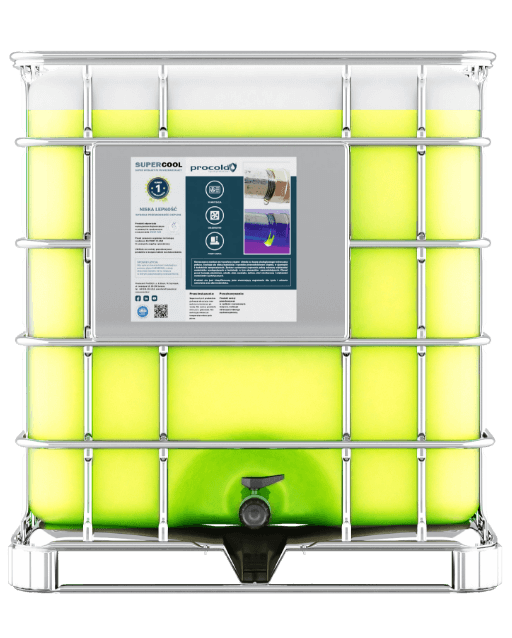
Potassium formate
Potassium formate is a formic acid potassium salt. This organic chemical compound can be obtained by dissolving potassium carbonate in 90% formic acid and crystallisation after elimination of carbon dioxide by heating. Potassium formate is a colourless solid (in the form of white crystals) with highly hygroscopic properties. It is mainly used in the chemical industry as a drilling fluid in oil extraction and in the refrigeration industry as a heat transfer medium. In refrigeration systems, it has excellent thermal conductivity at high and low temperatures.
In refrigeration systems, it has excellent thermal conductivity at high and low temperatures. Since it is environmentally friendly, it can also be used in installations and equipment where there is a risk of release into the environment. Potassium formate-based products allow to reduce the operating costs of systems in which they are used.
Since it is environmentally friendly, it can also be used in installations and equipment where there is a risk of release into the environment. Potassium formate-based products allow to reduce the operating costs of systems in which they are used.

All fluids produced by our company are mixtures of glycols, glycerol and potassium formate with additives such as anti-foam agents, stabilisers and inhibitors. We offer our products in a number of standard temperature variants, but we can also produce fluids with the concentration required for the customer’s individual needs.
Articles
Heat-Transfer Fluid Viscosity in HVAC Systems: Why It Matters for Flow and Pump Selection
Learn how fluid viscosity affects flow, pump selection and HVAC system performance—and why every heat-transfer fluid requires the […]
05/08/2026
How to Detect Leaks in an HVAC System? The Prolight D1018 Detector Lamp in Practice
See how the Prolight D1018 helps you quickly detect leaks in HVAC systems.
02/07/2026
QuickTest Inhibitor – a quick check of the anti-corrosion protection of HVAC installations
See how QuickTest Inhibitor test strips help you quickly verify the level of corrosion protection in HVAC systems […]
01/06/2026
HVAC Optimization: How Aquacorr SI Restores System Efficiency (Case Study)
How can you protect your central heating and HVAC systems from corrosion? Discover an effective solution based on […]
28/04/2026
Water in a Heat Pump System – What Really Determines System Longevity?
HVAC system fluid – a key yet often overlooked factor in system longevity.
30/03/2026
Delivery of Factory ECO to a Large Installation – Behind the Logistics Process
What does the delivery of Factory ECO to a large installation look like? Discover the logistics process, loading […]
13/02/2026
SUPERCOOL – a new era of efficiency in industrial refrigeratio
SUPERCOOL is a breakthrough in industrial refrigeration. Discover how potassium formate reduces energy costs and increases the efficiency […]
30/01/2026
Glycol or Water in Underfloor Heating with a Heat Pump?
Glycol in underfloor heating systems with heat pumps is now a safety standard. Find out why choosing the […]
29/12/2025