




How to deal with leaks in refrigeration systems?
Refrigeration systems use fluids which work as energy carriers and are alternately compressed and expanded. In the event of even the smallest leak, the fluid under pressure will escape, reducing the efficiency of the entire system and leading to other negative consequences. This is why it is necessary to carry out periodic testing to check the entire system for potential leaks. In this article, you will find out what can happen if you fail to react in time.

Why do leaks occur?
Refrigeration systems are pressure tested after installation to check for possible leaks. However, even if they pass such tests, the fittings may become damaged over time. Vibrations in the pipes, poorly tightened connections and even adverse weather conditions can lead to microcracks. The materials used in the system also age with time, making them more susceptible to damage that is not visible to the naked eye.

Consequences of leaks in the system
As even small microcracks may pose a serious problem, they should by no means be overlooked. Even minor leakage of glycol will over a longer period of time result in a shortage of fluid in the system, reducing its efficiency. On the other hand, lower fluid pressure can lead to damage to individual equipment in the system. Air inside the system also poses a potential threat, as it increases the risk of metal corrosion and disrupts the operation of the system.

The most serious consequence of fluid leakage in a refrigeration system is system failure and forced downtime, which generates significant losses, including spoiled food due to the rise of temperature in the warehouse.
A serious risk is also potential leakage of toxic fluids based on monoethylene glycol used in such systems as solar installations, which are becoming increasingly popular due to their lower price. The toxic fluid can penetrate into a utility water tank and, in the worst case scenario, such water can be ingested by people. If left undetected over a long period of time, a system failure poses a real threat to human health and life.
We will discuss this issue in detail in our upcoming video, so make sure you follow us on Facebook, Youtube and Linkedin to be up to date.
Detecting leaks in glycol systems
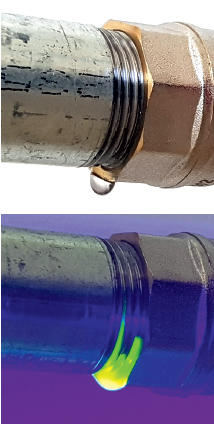
In refrigeration systems, it is very easy to mistake leaking glycol for condensate, so detecting small leaks before they become a problem can be quite challenging. Glycols by Procold are designed to facilitate this task as much as possible. Using detectors, you can quickly and easily detect any leaks, preventing a major system failure and downtime. Procold glycols can thus save your time and money.
Better safe than sorry
It is not worth to risk costly repairs of a leaking refrigeration system. It is much better and cheaper to take proper care of the system in advance to ensure its long trouble-free operation. So what can be done to avoid microcracks or damage to the system?
- Use appropriate antifreeze fluid. The fluid should be chosen based on the specifications of the system in question. The use of inappropriate fluid may reduce system performance, leading to malfunctions and disruptions. If you want to find out how to choose the right fluid for your system, check out one of our previous articles.
- Conduct annual inspections. An experienced service technician can assess the condition of the system and determine whether it is fully operational and safe.
Take care of your refrigeration system
In order to avoid leaks, follow the recommendations listed above.
Choosing the right type of fluid and using it in accordance with the manufacturer’s instructions will ensure trouble-free functioning of the system for a long time. However, keep in mind that every device is susceptible to wear and tear, so make sure to carry out inspections at least once a year. Only in this way can you ensure the safe operation of your refrigeration system.
Articles
Heat-Transfer Fluid Viscosity in HVAC Systems: Why It Matters for Flow and Pump Selection
Learn how fluid viscosity affects flow, pump selection and HVAC system performance—and why every heat-transfer fluid requires the […]
05/08/2026
How to Detect Leaks in an HVAC System? The Prolight D1018 Detector Lamp in Practice
See how the Prolight D1018 helps you quickly detect leaks in HVAC systems.
02/07/2026
QuickTest Inhibitor – a quick check of the anti-corrosion protection of HVAC installations
See how QuickTest Inhibitor test strips help you quickly verify the level of corrosion protection in HVAC systems […]
01/06/2026
HVAC Optimization: How Aquacorr SI Restores System Efficiency (Case Study)
How can you protect your central heating and HVAC systems from corrosion? Discover an effective solution based on […]
28/04/2026
Water in a Heat Pump System – What Really Determines System Longevity?
HVAC system fluid – a key yet often overlooked factor in system longevity.
30/03/2026
Delivery of Factory ECO to a Large Installation – Behind the Logistics Process
What does the delivery of Factory ECO to a large installation look like? Discover the logistics process, loading […]
13/02/2026
SUPERCOOL – a new era of efficiency in industrial refrigeratio
SUPERCOOL is a breakthrough in industrial refrigeration. Discover how potassium formate reduces energy costs and increases the efficiency […]
30/01/2026
Glycol or Water in Underfloor Heating with a Heat Pump?
Glycol in underfloor heating systems with heat pumps is now a safety standard. Find out why choosing the […]
29/12/2025