





How to safely mix old antifreeze with new one?
Mixing the existing glycol with new one is a procedure used to top up the system fluid and to maintain the optimal quality of the mixture. If you want to find out how to properly combine antifreeze fluids, make sure to read this article.

Mixing antifreeze fluids
Topping up antifreeze is practised in a few cases. One of them is glycol leakage due to a system failure, when the system must be filled with the amount of glycol that has leaked out. Another case is adding antifreeze concentrate to lower the freezing point of glycol. Antifreeze fluids are also mixed when the existing system needs to be expanded.

How to properly mix glycols?
If you are considering topping up your system with glycol, you need to take care of several issues beforehand. First of all, check the existing antifreeze in your system. It is advisable to carry out a test, which will show the condition of the fluid you are currently using. It will allow to estimate whether it would be better to top up glycol or to refill the system with new antifreeze fluid. Another important factor is checking the compatibility and operating temperature of the fluids you are planning to mix. Both glycols must be manufactured using the same technology and the same base product. Adding mains water to the system is not permitted. Diluting glycol with water may lead to corrosion and reduce the efficiency of the system. It is also not recommended to add pure raw material to the system, as it does not contain additives that have protective properties. The best solution is to mix fluids by the same manufacturer – then you are not risking voiding the warranty on the fluids and you avoid the potential problem of forming precipitates in such a mixture.
Articles
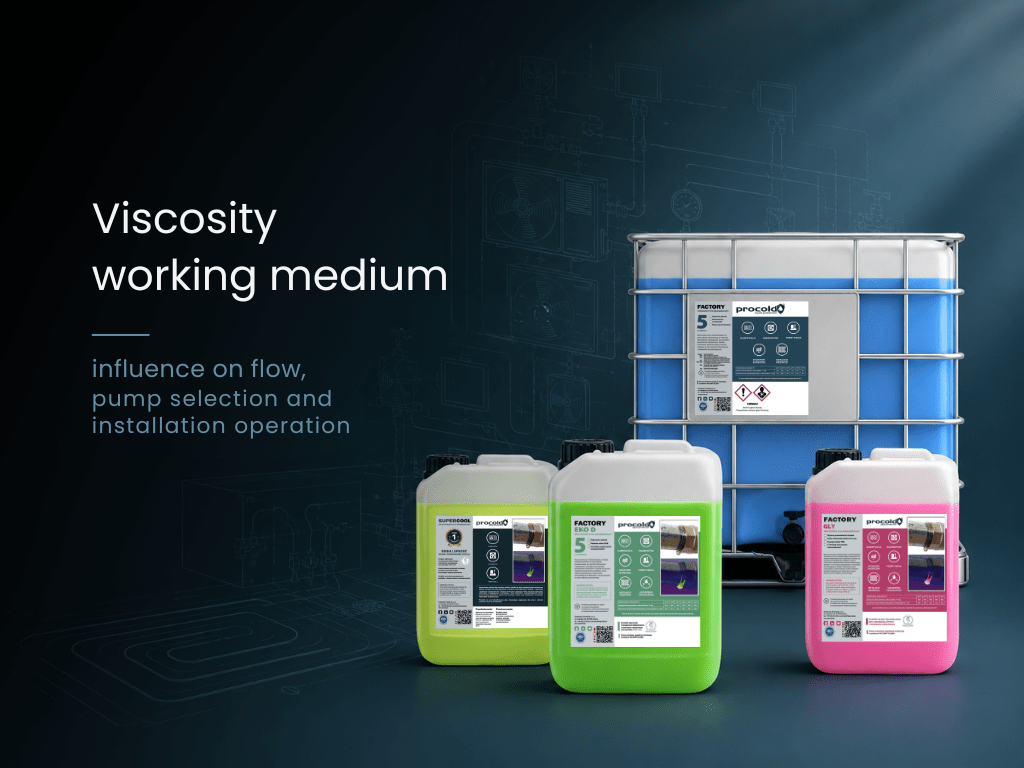
Heat-Transfer Fluid Viscosity in HVAC Systems: Why It Matters for Flow and Pump Selection
Learn how fluid viscosity affects flow, pump selection and HVAC system performance—and why every heat-transfer fluid requires the […]
05/08/2026
How to Detect Leaks in an HVAC System? The Prolight D1018 Detector Lamp in Practice
See how the Prolight D1018 helps you quickly detect leaks in HVAC systems.
02/07/2026
QuickTest Inhibitor – a quick check of the anti-corrosion protection of HVAC installations
See how QuickTest Inhibitor test strips help you quickly verify the level of corrosion protection in HVAC systems […]
01/06/2026
HVAC Optimization: How Aquacorr SI Restores System Efficiency (Case Study)
How can you protect your central heating and HVAC systems from corrosion? Discover an effective solution based on […]
28/04/2026
Water in a Heat Pump System – What Really Determines System Longevity?
HVAC system fluid – a key yet often overlooked factor in system longevity.
30/03/2026
Delivery of Factory ECO to a Large Installation – Behind the Logistics Process
What does the delivery of Factory ECO to a large installation look like? Discover the logistics process, loading […]
13/02/2026
SUPERCOOL – a new era of efficiency in industrial refrigeratio
SUPERCOOL is a breakthrough in industrial refrigeration. Discover how potassium formate reduces energy costs and increases the efficiency […]
30/01/2026
Glycol or Water in Underfloor Heating with a Heat Pump?
Glycol in underfloor heating systems with heat pumps is now a safety standard. Find out why choosing the […]
29/12/2025