





Why is rinsing the installation before filling it with antifreeze so important?
In today’s rapidly evolving world of refrigeration and heating technology, antifreeze fluids play a crucial role in maintaining efficiency and ensuring the safety of installations in extreme temperatures. However, the effectiveness of these glycol-based fluids depends not only on their quality but also on the condition of the installation into which they are introduced. Here, the process of rinsing the installation before filling it with antifreeze emerges as an essential preparatory step aimed at ensuring the optimal operation of the system.

The importance of cleanliness of the installation
Rinsing the installation is intended to remove any contaminants such as rust, deposits, residues of old fluid, and microorganisms that can negatively affect the effectiveness of the antifreeze fluid. These contaminants can lead to clogging, corrosion, and even damage to system components, thereby reducing heat exchange efficiency and increasing the risk of failure. Furthermore, we should not only focus on rinsing previously operating installations. It is important to flush even completely new systems before filling them with glycol-based fluid. During the assembly/construction of the entire installation, tiny contaminants are also generated, which will adversely affect the operation of the installation.

The benefits of flushing
Flushing the installation before introducing new fluid not only increases its effectiveness but also prolongs the lifespan of the entire system. Removing contaminants helps prevent corrosion, clogging, and other issues that could lead to costly repairs. Additionally, a clean installation allows the antifreeze fluid to distribute evenly and provide more effective protection against extreme temperatures. This also translates to lower operating costs.
Potential hazards of neglecting flushing

Neglecting the flushing process can result in a range of operational issues, from reduced energy efficiency to total system failure. Sediments and contaminants can create barriers for the antifreeze fluid, hindering its distribution and protective action. This, in turn, leads to uneven system operation and increases the risk of damage.
How to properly conduct flushing
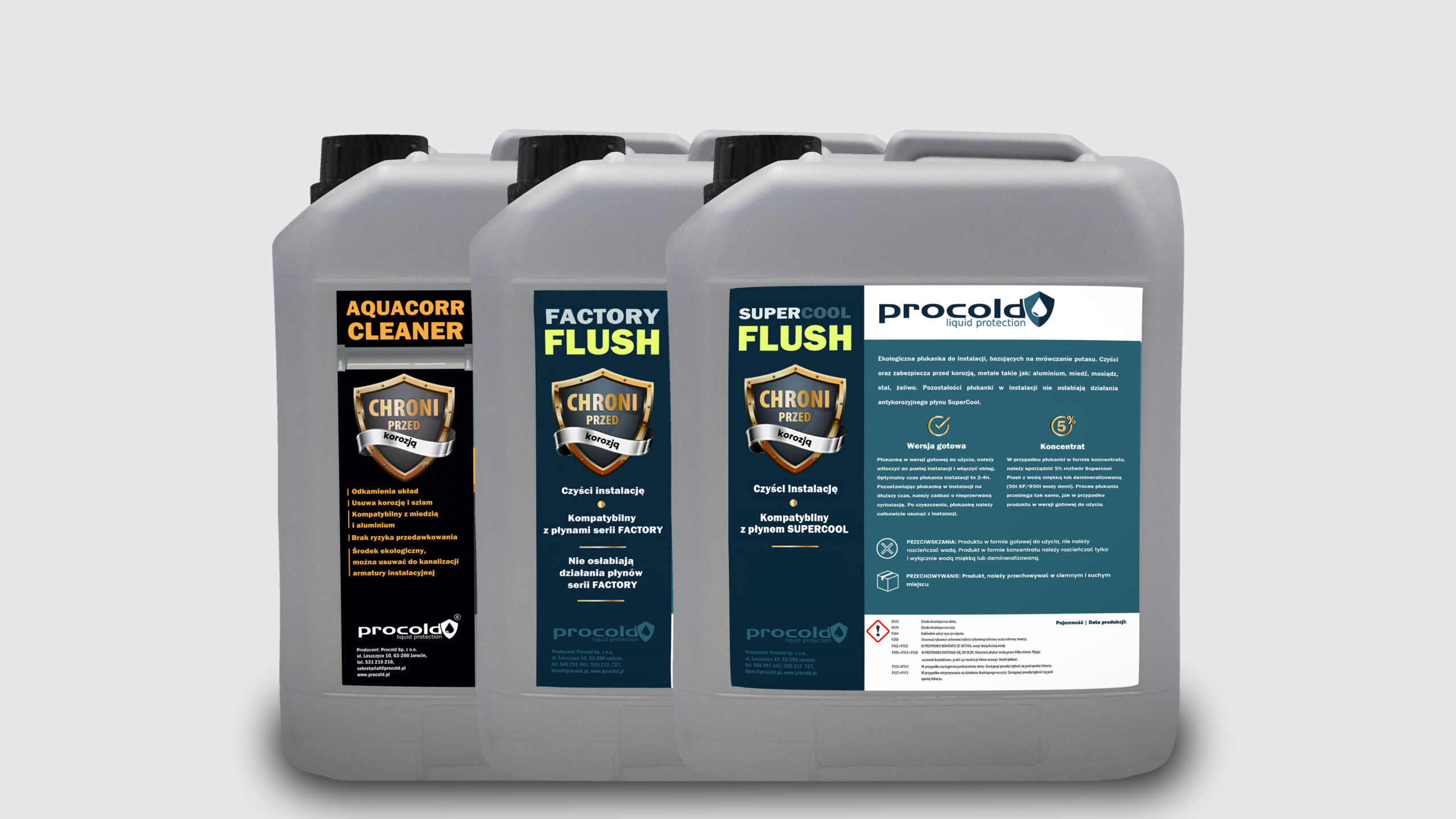
For the flushing process to be effective, it’s essential to follow the recommendations provided by the installation and antifreeze fluid manufacturer. This typically involves using specialized fluids such as Aquacorr Cleaner, Factory FLUSH, or Supercool FLUSH. Information about these products can be found on our website. It’s important to ensure that the entire system is thoroughly flushed and dried before introducing the antifreeze fluid.

In summary, flushing the installation before filling it with antifreeze is an extremely important step in maintaining optimal performance and safety of refrigeration and heating systems. The cleanliness of the installation is crucial for the effectiveness of the antifreeze fluid, and neglecting this process can lead to a variety of operational problems and costly repairs. Therefore, it’s important to follow the manufacturer’s recommendations and conduct the flushing process meticulously to ensure long-term and trouble-free operation of the system. Investing in flushing the installation translates to lower operating costs, as well as increased safety and comfort in using the installation.
Articles
Heat-Transfer Fluid Viscosity in HVAC Systems: Why It Matters for Flow and Pump Selection
Learn how fluid viscosity affects flow, pump selection and HVAC system performance—and why every heat-transfer fluid requires the […]
05/08/2026
How to Detect Leaks in an HVAC System? The Prolight D1018 Detector Lamp in Practice
See how the Prolight D1018 helps you quickly detect leaks in HVAC systems.
02/07/2026
QuickTest Inhibitor – a quick check of the anti-corrosion protection of HVAC installations
See how QuickTest Inhibitor test strips help you quickly verify the level of corrosion protection in HVAC systems […]
01/06/2026
HVAC Optimization: How Aquacorr SI Restores System Efficiency (Case Study)
How can you protect your central heating and HVAC systems from corrosion? Discover an effective solution based on […]
28/04/2026
Water in a Heat Pump System – What Really Determines System Longevity?
HVAC system fluid – a key yet often overlooked factor in system longevity.
30/03/2026
Delivery of Factory ECO to a Large Installation – Behind the Logistics Process
What does the delivery of Factory ECO to a large installation look like? Discover the logistics process, loading […]
13/02/2026
SUPERCOOL – a new era of efficiency in industrial refrigeratio
SUPERCOOL is a breakthrough in industrial refrigeration. Discover how potassium formate reduces energy costs and increases the efficiency […]
30/01/2026
Glycol or Water in Underfloor Heating with a Heat Pump?
Glycol in underfloor heating systems with heat pumps is now a safety standard. Find out why choosing the […]
29/12/2025