




How to protect heating installations against corrosion? The role of antifreeze fluids, flushes, and corrosion inhibitors.
Corrosion can pose a serious threat to the durability and efficiency of heating installations. This phenomenon leads to gradual deterioration of the materials used in the system components, thereby reducing its performance and even causing failure. Key to corrosion protection are suitable operating fluids, such as antifreeze fluids, as well as additives including flushes and corrosion inhibitors.
Let’s take a look at the actions that can be taken to protect a heating installation against corrosion😊
1. Choosing appropriate heat transfer fluids
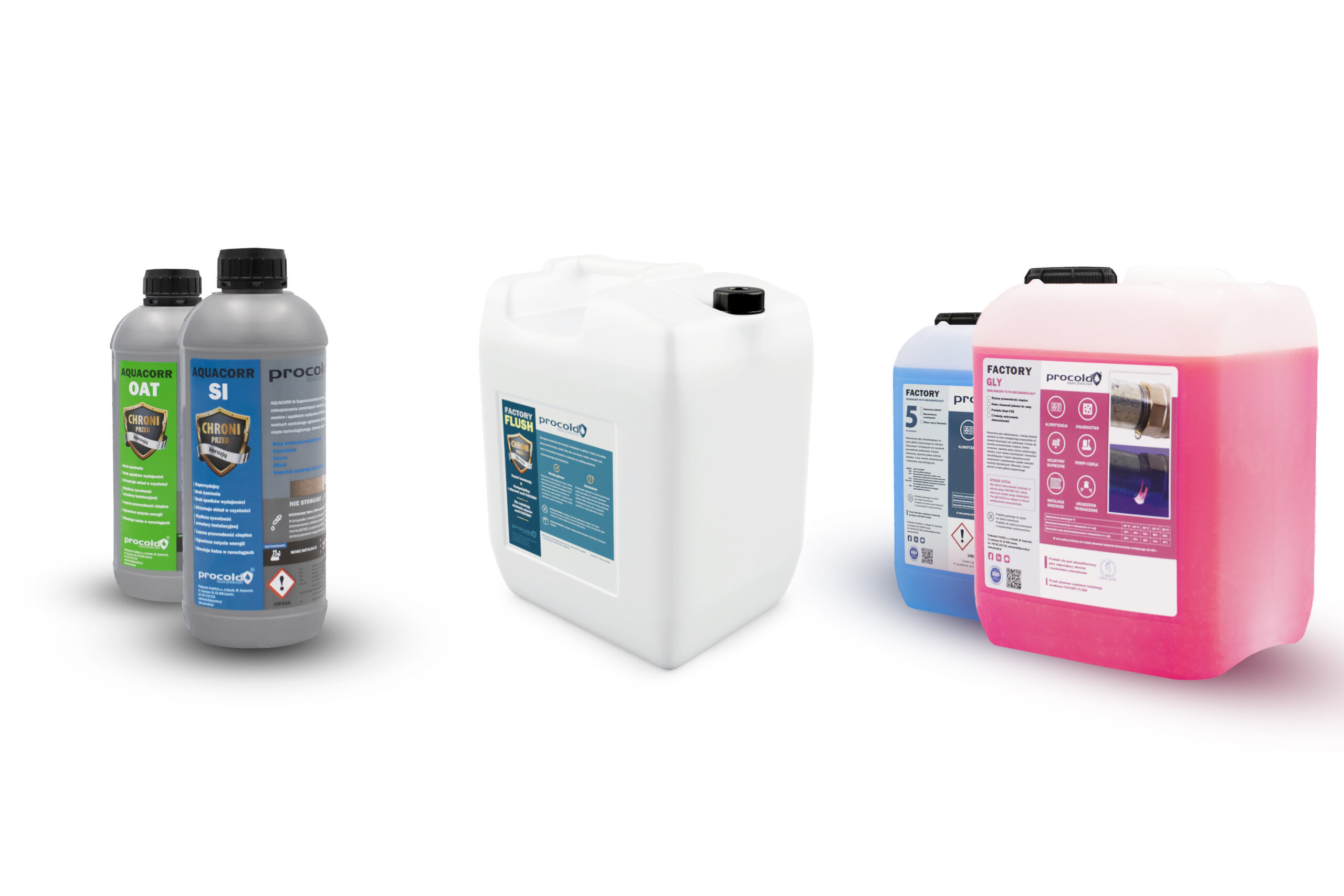
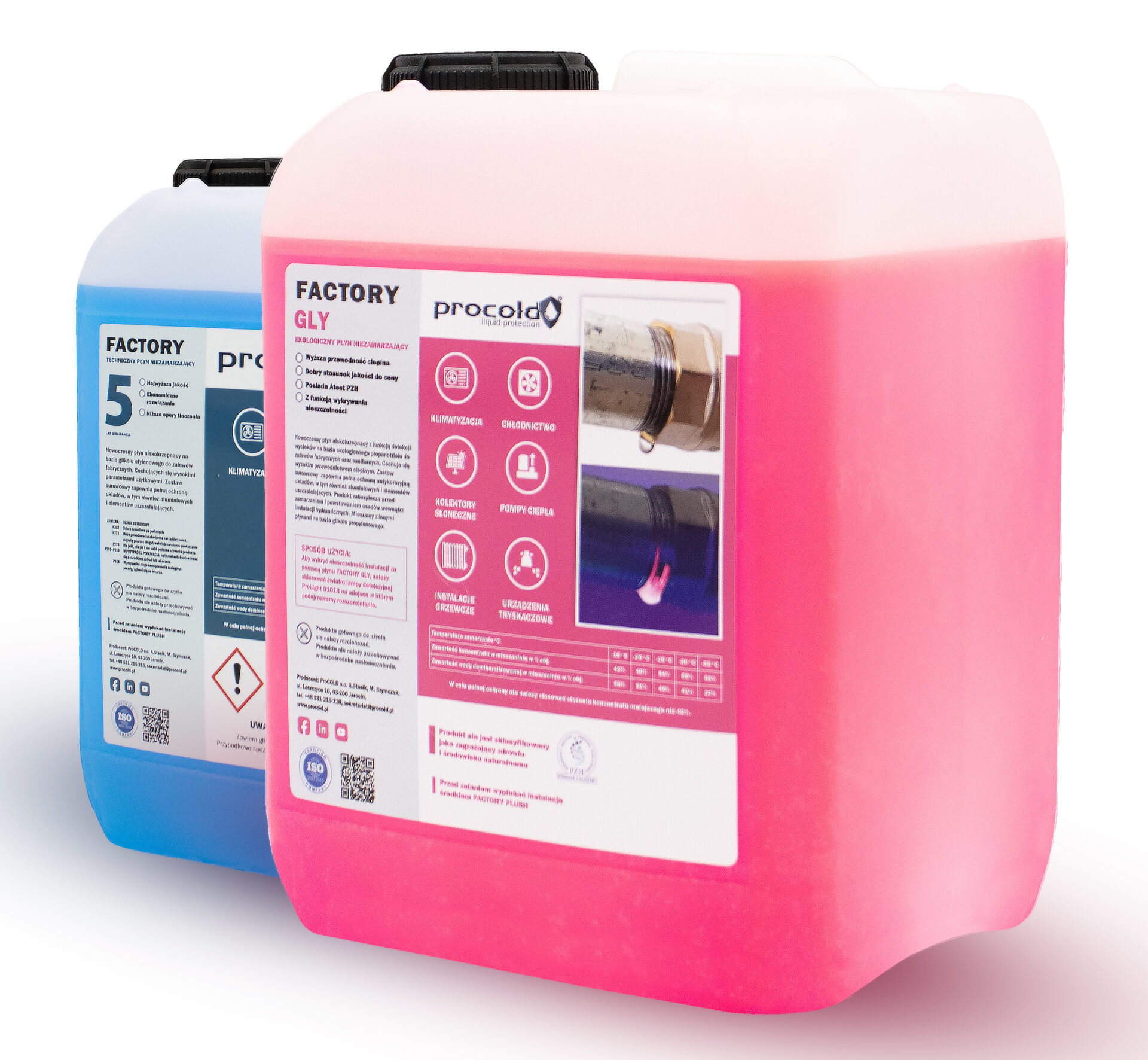
Antifreeze fluids based on glycol play a crucial role in heating systems, enabling efficient heat transfer. It is important to select a fluid that is compatible with the materials used in the system and contains the appropriate additives. Ready-to-use glycol-based fluids from Procold always include corrosion inhibitors that protect the system against corrosion.
2. Using flushes
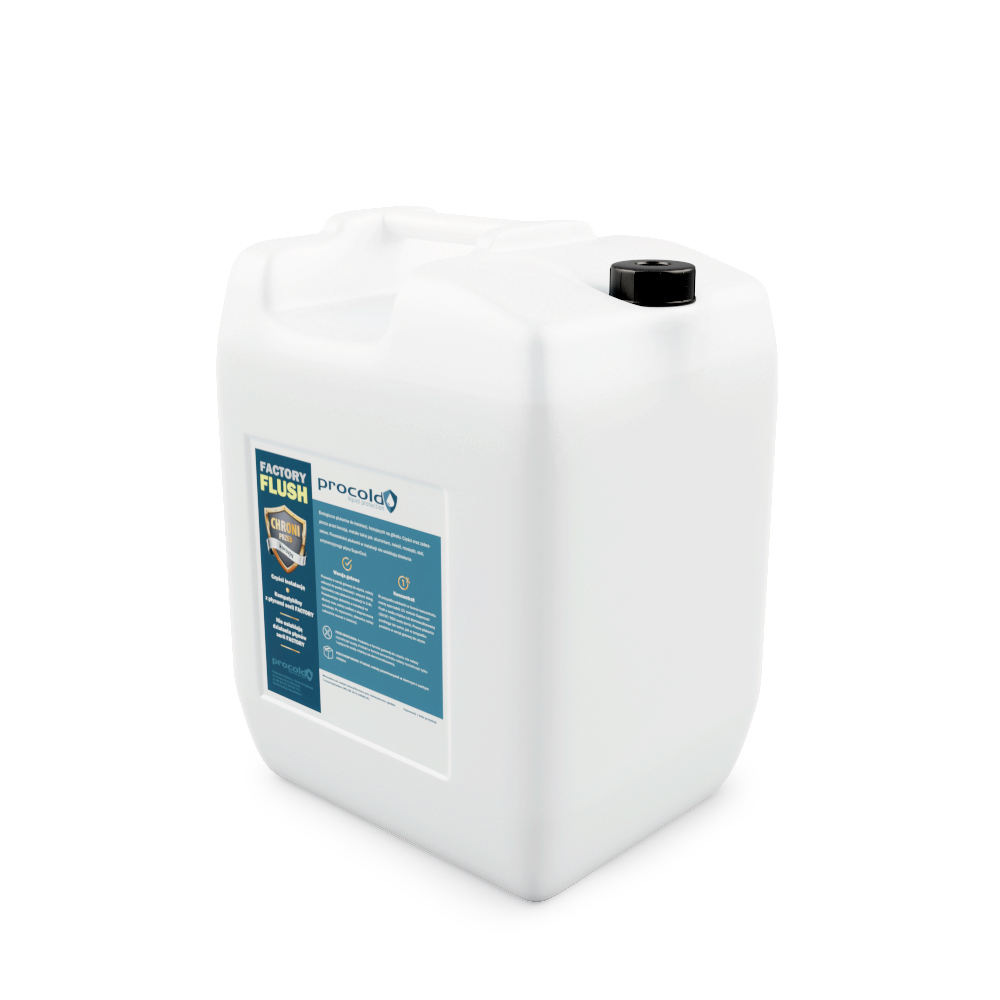
System flushing is a crucial step in maintaining a heating installation. It allows for the removal of any contaminants that could contribute to corrosion. Flushes are applied both before commissioning a new installation and when replacing the fluid in the system.
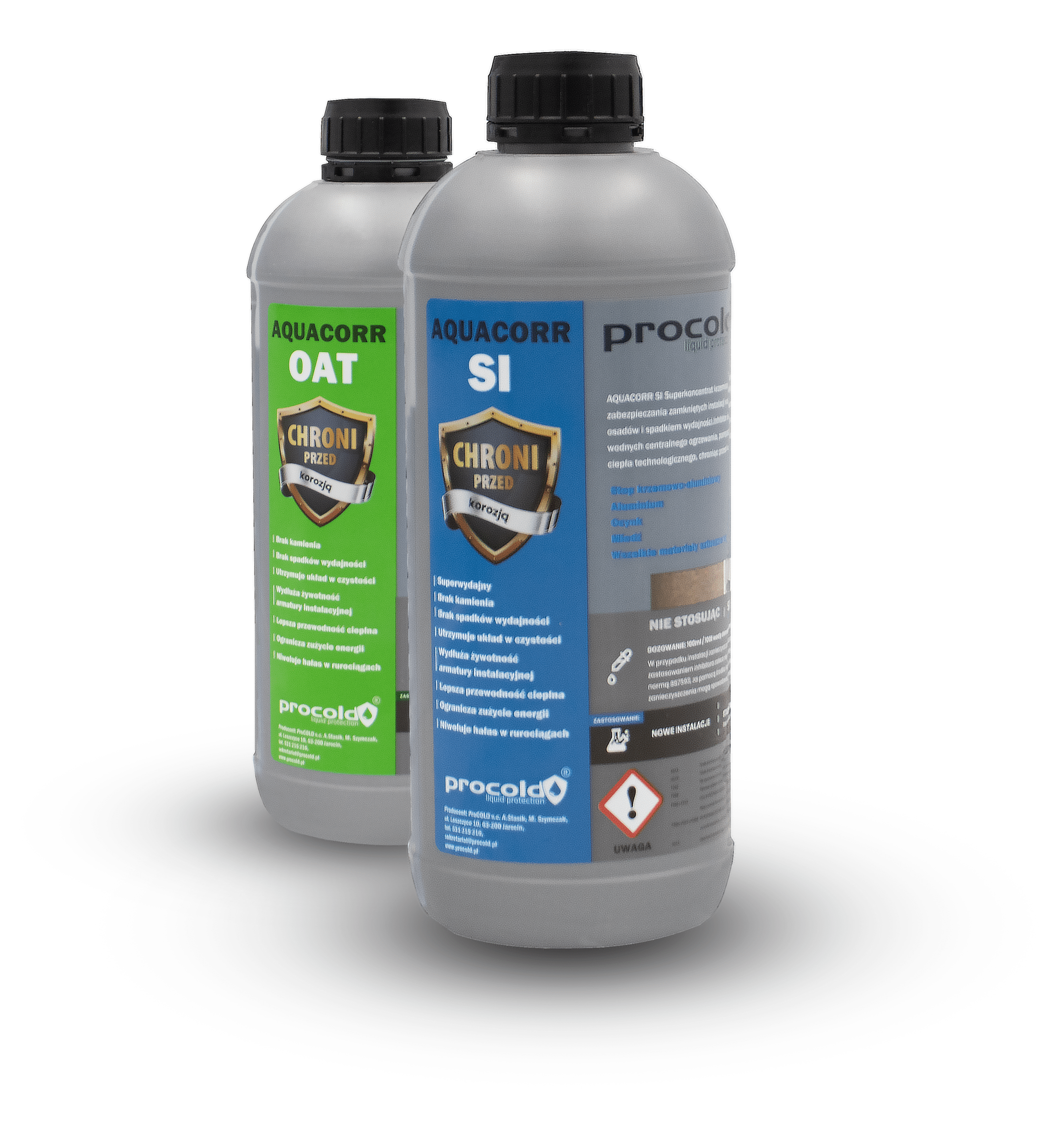
3. Using corrosion inhibitors
Corrosion inhibitors are substances added to antifreeze fluids to prevent corrosion. They work by forming a protective layer on the metal surface or by slowing down the chemical reactions that lead to corrosion. The choice of the appropriate corrosion inhibitor depends on the type of system, the type of metal, and the operating conditions of the system.”
4. Regular inspection and maintenance

Even the best corrosion protection cannot replace regular inspection and maintenance. Maintenance should include checking the condition of antifreeze fluids, including the concentration of additives, as well as cleaning and flushing the system. Regular inspections can help detect early signs of corrosion before they lead to serious issues.
You can learn more about this topic from one of our previous articles!
5. Paying attention to operating conditions
Corrosion can be accelerated by various factors, including high temperatures, high humidity, and the presence of chemicals. Monitoring the operating conditions and maintaining the installation in optimal conditions can help prevent corrosion.
In summary, protecting heating installations against corrosion is a crucial element for their long-term and efficient operation. Choosing appropriate operating fluids, using flushes and corrosion inhibitors, regular inspection and maintenance, and monitoring operating conditions are some of the methods that can help ensure optimal protection. Remember that proper preventive actions can lead to significant savings in the long run by avoiding costly repairs and replacement of damaged installation components.
Articles
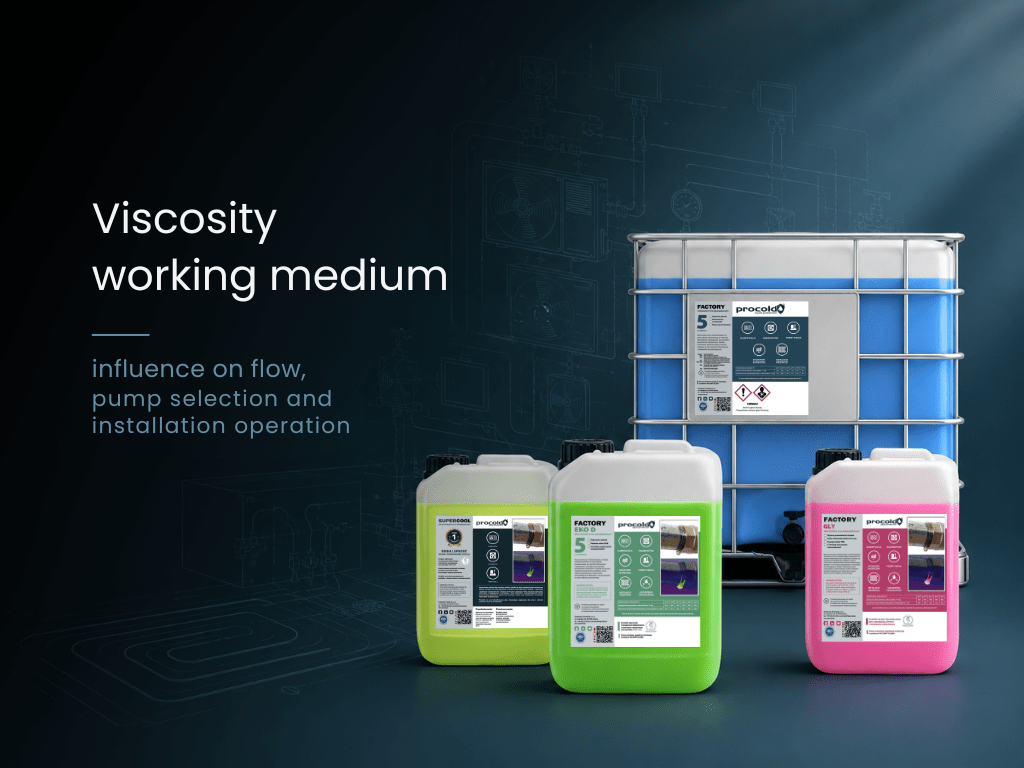
Heat-Transfer Fluid Viscosity in HVAC Systems: Why It Matters for Flow and Pump Selection
Learn how fluid viscosity affects flow, pump selection and HVAC system performance—and why every heat-transfer fluid requires the […]
05/08/2026
How to Detect Leaks in an HVAC System? The Prolight D1018 Detector Lamp in Practice
See how the Prolight D1018 helps you quickly detect leaks in HVAC systems.
02/07/2026
QuickTest Inhibitor – a quick check of the anti-corrosion protection of HVAC installations
See how QuickTest Inhibitor test strips help you quickly verify the level of corrosion protection in HVAC systems […]
01/06/2026
HVAC Optimization: How Aquacorr SI Restores System Efficiency (Case Study)
How can you protect your central heating and HVAC systems from corrosion? Discover an effective solution based on […]
28/04/2026
Water in a Heat Pump System – What Really Determines System Longevity?
HVAC system fluid – a key yet often overlooked factor in system longevity.
30/03/2026
Delivery of Factory ECO to a Large Installation – Behind the Logistics Process
What does the delivery of Factory ECO to a large installation look like? Discover the logistics process, loading […]
13/02/2026
SUPERCOOL – a new era of efficiency in industrial refrigeratio
SUPERCOOL is a breakthrough in industrial refrigeration. Discover how potassium formate reduces energy costs and increases the efficiency […]
30/01/2026
Glycol or Water in Underfloor Heating with a Heat Pump?
Glycol in underfloor heating systems with heat pumps is now a safety standard. Find out why choosing the […]
29/12/2025