




Water quality in the central heating system.
Water quality is of great importance for the entire central heating system.
Central heating systems are made up of interconnected appliances. In order to ensure efficient and trouble-free operation of the entire system for a long time, each of its components must function seamlessly and be optimally selected for the intended use. The same is true of the water used in central heating systems. It runs through the entire system and works as the heat transfer medium, reacting with the components of the system. For this reason, it is extremely important that its quality and parameters correspond to the intended use and the relevant standards. Water is the key component of the entire system.

Consequences of using non-compliant water.
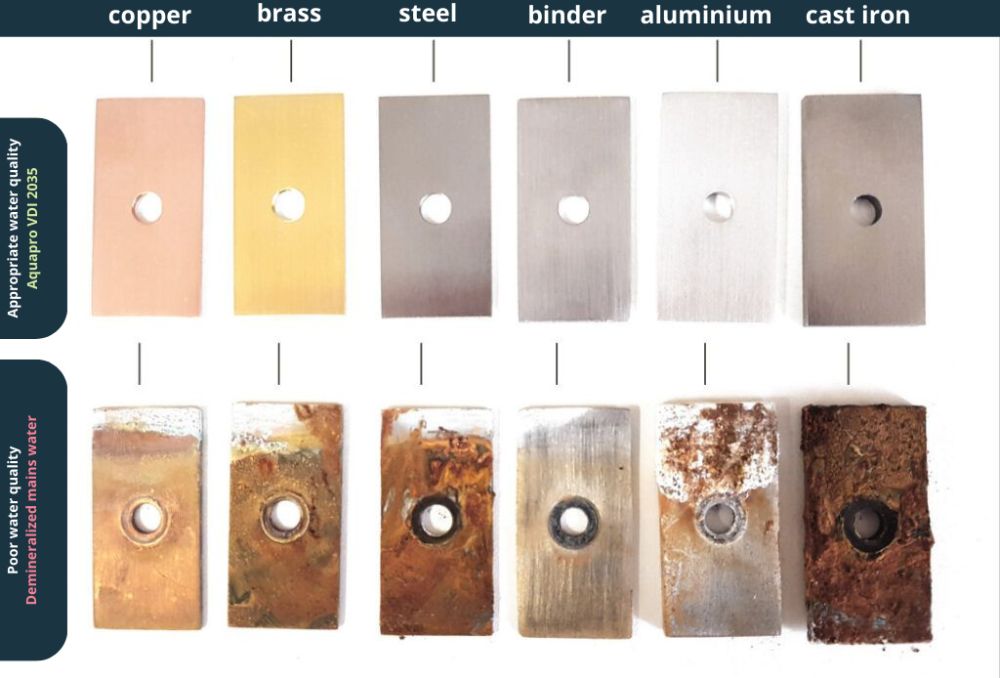
Using water of unsuitable quality can cause a number of problems. These may include:
- The formation of scale – a deposit of calcium and magnesium carbonates, which reduces the efficiency of the entire system by causing local underheating or overheating, reducing water flow or accelerating corrosion underneath the deposits.
- Corrosion, which can lead to damage to pipes, heat exchangers and parts of the boiler.
- Contamination that can decrease heat transfer efficiency, translating directly into higher heating costs.
- Microbial contamination.
What affects water quality?
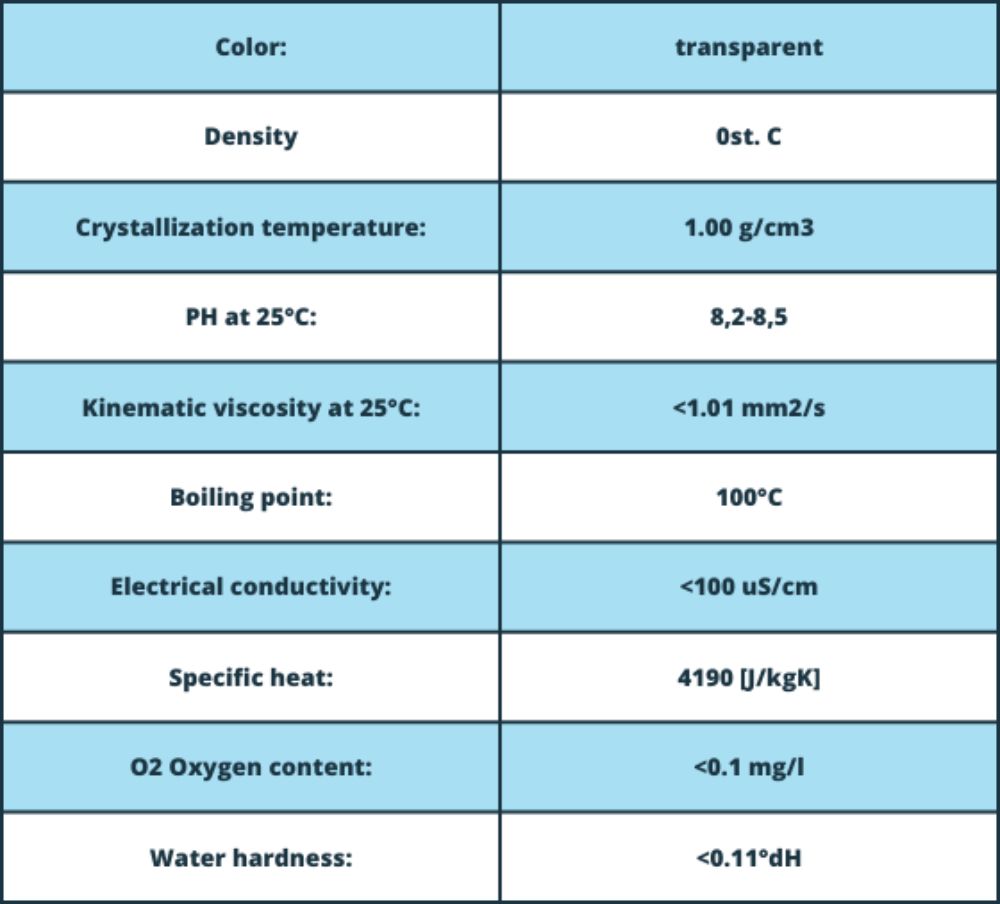
A water parameter that is important for ensuring trouble-free and economical operation of the entire heating system is its pH. Boiler water should have a pH between 8.2 and 8.5, which is optimal for most metals. An excessively high or low pH may lead to corrosion. Depending on the materials used in the system, the ideal pH range varies. Galvanic corrosion may be triggered by the electrical conductivity of the water, expressed in μS/cm. The lower the value, the better. Another important factor is water hardness. As mentioned above, hard water may lead to scale. It is therefore important that the water meets the relevant standards.
VDI 2035 standard.
Among the important standards for water quality are, for example, those developed by the Polish Organisation of Heat Pump Technology Development, which are based on the German VDI 2035 standard and precisely describe the requirements to be met by water. Compliance with these standards helps to ensure long-term and trouble-free operation of the entire heating system. The VDI 2035 Standard is often used by itself as a national standard and is cited by many boiler manufacturers in their instructions as the one to be followed. The aforementioned problems that reduce the efficiency of systems may require repairs or component replacement. This, in turn, translates into higher operating costs. This is why following the PORTPC guidelines is so important when designing and commissioning a heating system.

Top-up water.
Over time, the volume of water in the system decreases. In addition, leakages may also affect the quality of the water. It is, therefore, important to fill the system with top-up water and to regularly test its parameters to determined whether treatment is necessary. Top-up water should maintain the parameters of the water already present in the system.
As can be seen, there are many factors that affect the efficiency and lifespan of a heating system. By following the relevant standards and recommendations of boiler manufacturers, it is possible to create an energy- and cost efficient system that will serve its user for many years. A good, ready-made solution in this respect is AQUAPRO VDI2035 , boiler water, which has the right parameters ensuring trouble-free and efficient operation of the entire heating system. In order to prevent corrosion caused by water, special corrosion inhibitors can also be used.
Articles
Heavy Duty Coolant for Industrial Engines – What Does It Really Mean?
How does a Heavy Duty coolant differ from a plain glycol base? We explain the role of inhibitors, […]
12/10/2026
How to Choose a Heat Transfer Fluid for an HVAC System? 7 Key Selection Criteria
Discover 7 key criteria: temperature, materials, safety, pump parameters and fluid monitoring.
24/09/2026
Heat-Transfer Fluid Viscosity in HVAC Systems: Why It Matters for Flow and Pump Selection
Learn how fluid viscosity affects flow, pump selection and HVAC system performance—and why every heat-transfer fluid requires the […]
05/08/2026
How to Detect Leaks in an HVAC System? The Prolight D1018 Detector Lamp in Practice
See how the Prolight D1018 helps you quickly detect leaks in HVAC systems.
02/07/2026
QuickTest Inhibitor – a quick check of the anti-corrosion protection of HVAC installations
See how QuickTest Inhibitor test strips help you quickly verify the level of corrosion protection in HVAC systems […]
01/06/2026
HVAC Optimization: How Aquacorr SI Restores System Efficiency (Case Study)
How can you protect your central heating and HVAC systems from corrosion? Discover an effective solution based on […]
28/04/2026
Water in a Heat Pump System – What Really Determines System Longevity?
HVAC system fluid – a key yet often overlooked factor in system longevity.
30/03/2026
Delivery of Factory ECO to a Large Installation – Behind the Logistics Process
What does the delivery of Factory ECO to a large installation look like? Discover the logistics process, loading […]
13/02/2026